Cook-Off Fundraiser Playbook: 6-Week Plan to Raise $500-$5,000
How to run a cook-off fundraiser: a 6-week plan, entry fee and ticket pricing, QR voting, and a day-of checklist to raise $500-$5,000.
Cook-offs are one of the best fundraiser formats out there. The overhead is low, the community engagement is high, and people actually want to come. You are not asking people to sit through a silent auction or buy wrapping paper - you are inviting them to eat great food and argue about whose chili is better.
Quick answer: A cook-off fundraiser typically raises $500-$5,000 from a mix of team entry fees ($10-$25), tasting tickets ($5-$10 per attendee), sponsorships, and day-of donations. Give yourself 6 weeks of lead time, recruit 8-12 contestants, use QR code voting to keep things moving, and cap the event at 90 minutes of tasting. Net margins run 70-80% of gross revenue when contestants supply the food.
Running a chili-specific fundraiser? Our Complete Chili Cook-Off Guide covers rules, judging, and prize ideas. This guide focuses on the fundraising mechanics that apply across any cook-off format.
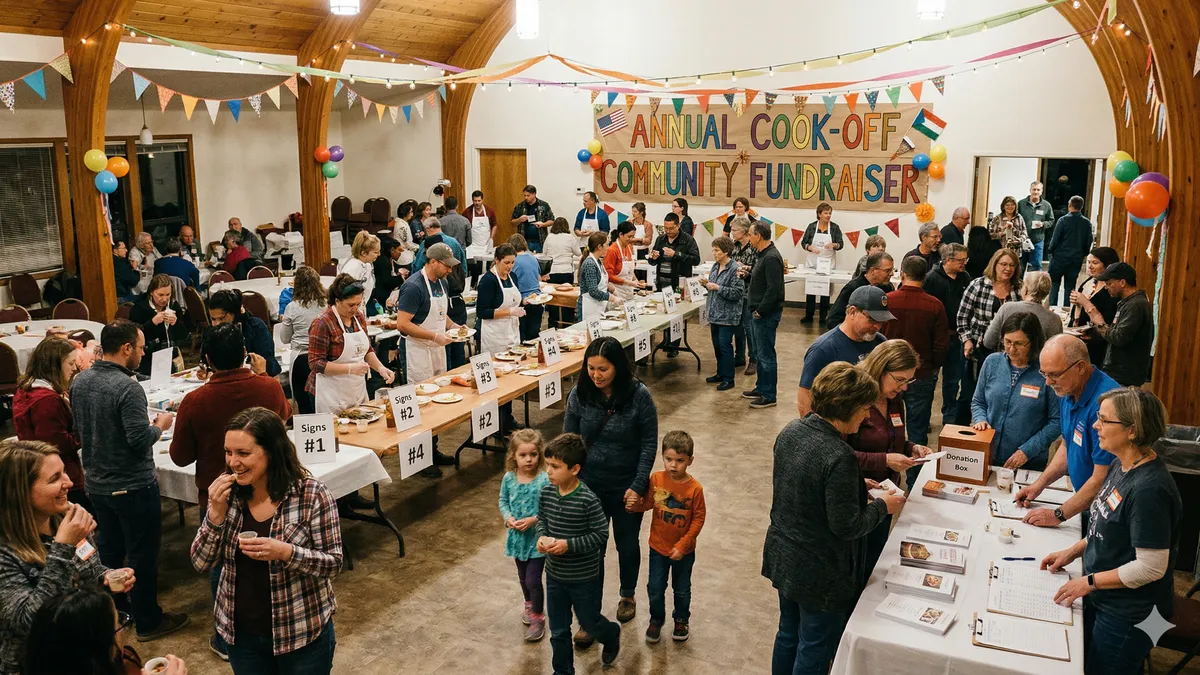
This guide covers the full planning process: timelines, revenue streams, voting logistics, and the details that turn a good fundraiser into one that people ask about for months afterward.
Why Cook-Offs Work as Fundraisers
A few things make cook-offs uniquely suited to fundraising.
Low overhead costs. Contestants supply the food. Your organization covers supplies, the venue, and prizes. Total expenses for a 50-person event typically run $150-$300, which means almost every dollar from entry fees and tasting tickets goes straight to your cause.
Built-in engagement. People do not just show up and eat. They taste, judge, debate, and cheer. A cook-off turns passive attendees into active participants, and active participants donate more, talk about the event more, and come back next year.
Easy to repeat. The first year is the hardest. Once you have a template - venue, timing, format, promotional materials - running it again the next year takes half the effort. Many organizations turn annual cook-off fundraisers into signature events that grow year over year.
Broad appeal. Unlike a gala that skews formal or a fun run that requires physical effort, a cook-off works for almost any crowd. Families, coworkers, retirees, college students - everyone eats, and most people have opinions about food.
Why Chili Is the Default Fundraiser Format
Chili shows up at more fundraisers than every other cook-off format combined, and it is not just tradition. The economics genuinely work better.
The cost per serving is unbeatable. A 1.5-2 quart batch runs $12-18 in ingredients and yields 16-20 tasting servings. That is well under a dollar a serving, and contestants are covering it themselves. No other format gets you that much food for that little donated cost.
It holds. A public fundraiser runs three or four hours, and chili sits in a slow cooker on low the entire time without getting worse. Barbecue dries out, baked goods go stale, and anything fried has a twenty-minute window. Chili is the only format where the last taster of the day gets the same thing the first one did.
The line moves. One ladle, one cup, no plating and no cutting. When you are serving 200 people on a schedule, throughput is the difference between a smooth event and a forty-minute queue that makes people leave before they buy raffle tickets.
Dietary coverage is easy. A vegetarian chili sits on the same table as everything else and needs no separate prep area. For a community event where you cannot screen attendees in advance, that matters more than it sounds.
It suits the season. Fundraiser cook-offs cluster in fall and winter, peaking around October and again around the Super Bowl. Chili is what people want in exactly those months, and it works outdoors in cold weather where most formats do not.
What chili changes about your pricing
Ticket pricing itself is covered further down, and chili does not change the numbers. What it changes is what you can afford to offer at them.
Because a batch costs a contestant $12-18 and yields 16-20 servings, you can sell unlimited tastings rather than metering out a fixed count. That is easier to police at the door, feels generous, and the ingredient cost is low enough to absorb. Most other formats cannot do that without eating the margin.
The one thing to lock early is the team entry fee. Set it before you recruit, because raising it later reads badly and costs you contestants.
For the event mechanics themselves - rules, judging criteria, categories, prizes - see the chili cook-off guide. Everything below is the fundraising layer that sits on top of any format.
Planning Timeline
Give yourself at least six weeks. Here is how to use that time.
6 Weeks Out: Lock the Fundamentals
Choose your format. Chili cook-offs are the most popular fundraiser format because chili is cheap to make, travels well, and serves large crowds. BBQ works great for outdoor summer events but requires more equipment (grills, smokers). Bake-offs are excellent for school and church fundraisers where families can contribute.
Book your venue. Churches, community centers, fire stations, and school gyms are the most common venues for fundraiser cook-offs. Many will discount or donate the space for charity events. Outdoor spaces (parks, parking lots) work for BBQ events but require a weather backup plan.
Set your ticket and entry fee structure. More on revenue streams below, but decide early so you can include pricing in all promotional materials.
Check permit requirements. Indoor events at established venues usually need no permits. Outdoor events on public property may require a temporary food service permit. Contact your local health department at least four weeks before the event.
4 Weeks Out: Build Your Team and Contestant List
Recruit contestants. Aim for 8-12 entries in a single flight. Fewer than 8 makes the event feel thin. Past 12, tasters fatigue and later entries get marked down for their position rather than their chili - so if demand is higher than that, split into categories and judge each as its own flight rather than stretching one. Reach out to known cooks in your community first - their participation makes it easier to recruit others.
Assign volunteer roles. You need people for setup, registration, serving assistance, cleanup, and results management. A 50-person event needs 5-8 volunteers minimum.
Line up sponsors. Local businesses will often sponsor prizes or printed materials in exchange for a logo on the event banner. Even small sponsorships ($50-$100) offset costs.
2 Weeks Out: Promote and Prepare
Push promotion hard. Social media, flyers at the venue and partner businesses, email to your organization's list. Include the date, time, location, ticket price, and what the funds support.
Order supplies. Tasting cups (3 oz size, 15-20 per entry), plastic spoons, napkins, tablecloths, table numbers, palate cleansers. Buy 30% more than you think you need.
Set up your voting system. If you are using digital voting (and for a fundraiser, you should), create your event ahead of time. Add all confirmed entries, set up categories if applicable, and generate your QR code. Print the QR code on table tents and include it on the tasting ticket. See the QR code voting setup guide for a detailed walkthrough.
Prepare your announcement script. Write a short script for the emcee that covers: welcome, what the funds support, how to vote, when voting closes, and when winners are announced. Keep it under 3 minutes. Nobody came to hear a speech.
Day-Of
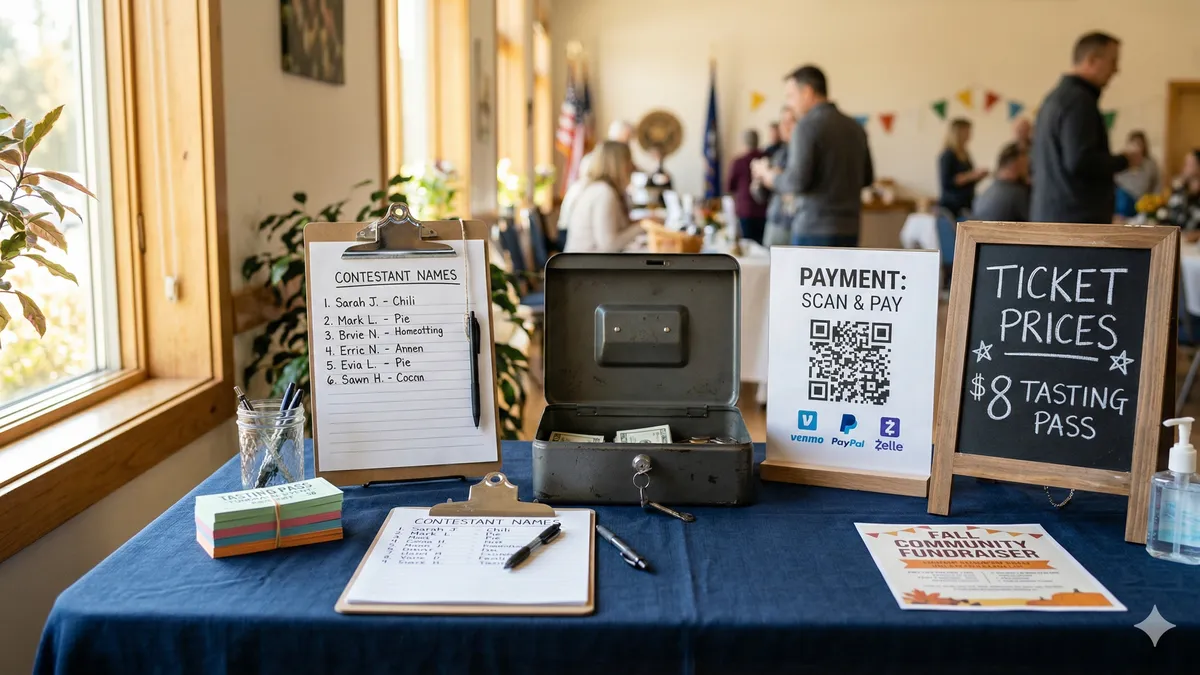
Arrive 90 minutes early. There is more to set up than a casual event: registration table, payment signage, tasting stations, QR code displays, and a results screen if you have one.
Run a tight schedule. Post the timeline everywhere:
- 11:00 AM - Doors open, registration
- 11:30 AM - Tasting begins, voting opens
- 12:30 PM - Voting closes
- 12:45 PM - Winners announced, prizes awarded
- 1:00 PM - Wrap up
Collect entry fees and ticket sales at the door. Have a registration table with someone handling cash and a visible sign with Venmo/PayPal info. Make paying easy.
Revenue Streams
A cook-off fundraiser makes money from several sources. The best events use all of them.
Contestant Entry Fees
Charge $10-$25 per team to enter the competition. This covers a small portion of expenses and signals commitment - teams that pay an entry fee are less likely to no-show. For a 10-team event, entry fees alone bring in $100-$250.
Tasting Tickets
This is your biggest revenue source. Charge $5-$10 per person for a tasting pass that lets them sample every entry and vote. For a 50-person event at $8 per ticket, that is $400 in ticket sales alone. Price it affordably - you want maximum participation, not maximum per-ticket revenue.
Raffle and Silent Auction
Set up a raffle table with donated prizes. Sell raffle tickets at $1-$5 each or in bundles (5 for $10). Prizes can include gift cards from local restaurants, kitchen gadgets, or themed baskets. A raffle adds $200-$500 to most events and gives people something to do between tasting and waiting for results.
Direct Donations
Put out a donation jar (physical and digital). Some people want to give more than the ticket price, especially when they are having a good time and feeling connected to the cause. A simple sign that says "All proceeds support [your cause]" with a QR code to a donation page makes it easy.
Sponsorships
Local businesses will often sponsor prizes or supplies in exchange for logo placement on event materials and a mention in the announcement. Even $50-$100 sponsorships add up and reduce your out-of-pocket expenses to near zero.
Voting at Scale
For fundraiser cook-offs, voting logistics matter more than at a casual office event. You have paying attendees who expect a fair competition, more people to manage, and higher stakes for getting results right.
Cookoff handles voting and shows you who's voted and who hasn't, with results the instant you finalize. Free for everyone, including judges.
Plan my fundraiser cookoffWhy Digital Voting Matters for Fundraisers
Paper ballots at a 50+ person event are a headache you do not need. Counting takes 20-30 minutes while a crowd that paid to be there gets bored and starts leaving. Errors in counting undermine credibility. Ties are awkward to break publicly.
Digital voting with QR codes solves all of this. Every attendee scans the code, votes from their phone, and results calculate instantly. You can announce winners within minutes of voting closing while the energy is still high.
For fundraisers specifically, Cookoff is worth considering because it handles the specific things fundraiser organizers care about: self-vote prevention (so contestants cannot rig their own scores), admin visibility into who's voted (so you know when everyone's done), and instant results (so you do not keep a paying crowd waiting).
Tips for Fundraiser Voting
Include the QR code on the tasting ticket. This is the single best thing you can do for judge participation. If the QR code is on the ticket they are already holding, they scan it while standing at the tasting table. No separate instruction needed.
Announce voting at least three times. Open (when tasting starts), reminder (20 minutes before close), and last call (5 minutes before close). At a fundraiser, people are socializing, browsing the raffle, and eating - they need reminders.
Close voting on time. Do not extend it. People who know there is a hard deadline vote. Extensions teach people that deadlines do not matter, and next year they will be even slower.
Prizes That Encourage Participation
Fundraiser prizes serve a different purpose than competition prizes. The goal is not just to reward the winner - it is to make people want to enter next year and to make the announcement entertaining for spectators.
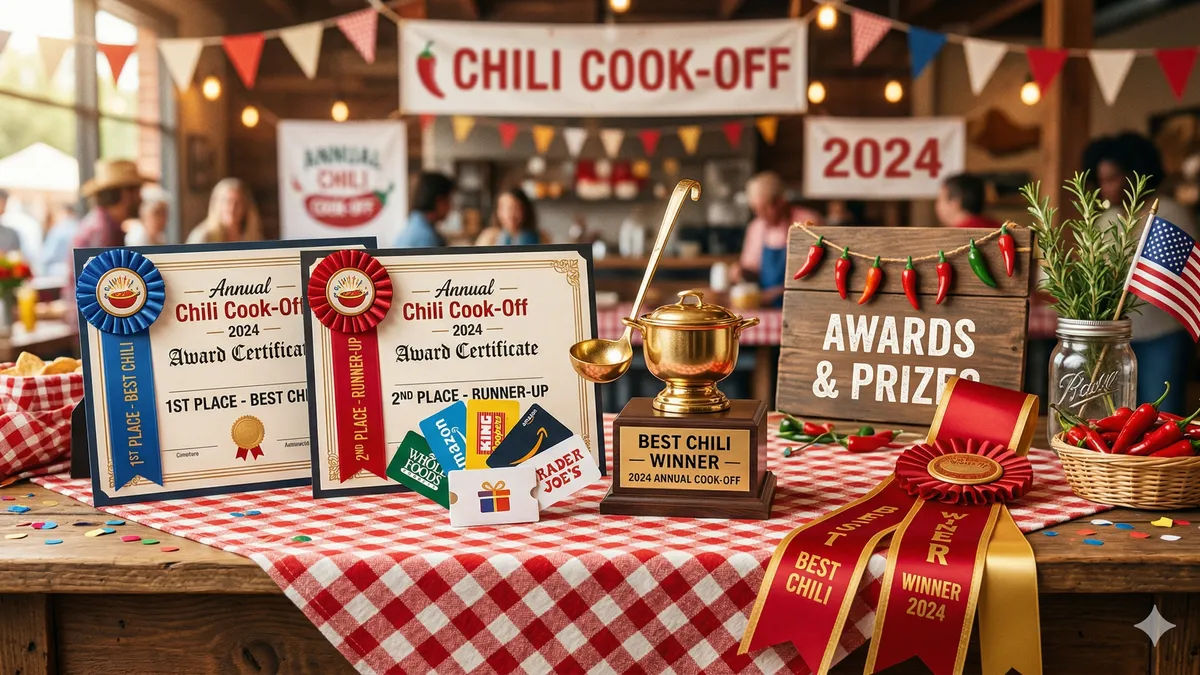
Trophy or traveling award. A custom trophy, golden ladle, or engraved cutting board becomes a tradition. The winner displays it until the next event. Check out the full prize ideas guide for more inspiration.
Gift cards from sponsors. Restaurant gift cards, kitchen store credits, or food delivery credits are practical and appreciated. They also give sponsors direct visibility.
Bragging rights certificate. A printed "Best Chili in [Town Name] 2026" certificate costs nothing and gets framed and displayed in kitchens across town. Free marketing for next year's event.
Multiple awards. Hand out awards for Best Overall, People's Choice, Most Creative, and Best Presentation. More awards mean more winners, more excitement, and more people motivated to enter next time.
Making It Repeatable
The real value of a cook-off fundraiser is not the one event - it is building an annual tradition that grows each year.
Document everything. After the event, write down what worked, what did not, how many people came, how much you raised, and what you would change. This document becomes your playbook for next year.
Collect emails. Use the registration process to build an email list for next year's event. A simple "Want to hear about next year's cook-off?" checkbox gets most people to opt in.
Share results publicly. Post winners on social media. Share the total amount raised. Tag contestants and sponsors. This builds anticipation for the next one.
Set a tentative date for next year before the current event ends. "Same time next year" is an easy commitment to get from a crowd that just had a great time.
Your Fundraiser Cook-Off Checklist
6 Weeks Out
- Choose format (chili, BBQ, bake-off)
- Book venue
- Set pricing (entry fees, tasting tickets)
- Check permit requirements
- Create event page and promotional materials
4 Weeks Out
- Recruit 8-12 contestants (or split into categories)
- Recruit 5-8 volunteers
- Secure sponsors for prizes and supplies
- Set up digital voting event
2 Weeks Out
- Push promotion (social, email, flyers)
- Order supplies (30% buffer)
- Print QR codes on table tents and tickets
- Confirm all contestants and volunteers
Day-Of
- Arrive 90 minutes early
- Set up registration, tasting stations, raffle
- Test QR code and voting system
- Run event on schedule
- Announce winners while crowd is still engaged
- Collect donation jar, raffle proceeds, remaining ticket sales
Related reading:
Run the fundraiser
Cookoff handles voting and shows you who's voted and who hasn't, with results the instant you finalize. Free for everyone, including judges.
Plan my fundraiser cookoff