Chili Cook-Off Team Names and Chili Names That Work
80 chili cook-off team names and dish names, grouped by pun, heat, region, and office-safe categories, plus how names interact with blind tasting.
Search for chili cook-off names and you'll land on lists claiming "600+ names" or "750+ names." Scroll through one and you'll find the same fifteen puns repeated with filler in between, no organization, and no distinction between a team name and a dish name - two genuinely different things that get lumped together as if they were interchangeable.
They're not. Your team name is who you are - it goes on the sign-up sheet, maybe a banner or a t-shirt, and it's what people call your group before and after the event. Your chili's name is what's written on the tent card sitting in front of your actual pot, and at a real cook-off, that name has to do real work: it's often the only thing a taster reads before they vote. Get it right and it's genuinely useful. Get it confused with your team name and, if you're running blind tasting, you can accidentally out yourself before the voting even closes.
This list skips the volume game. It's about 80 names, organized so you can actually find what you need, plus the practical advice the big listicles leave out.
Team Names vs. Chili Names: Know Which One You're Picking
Before you pick anything, decide which one you're naming.
Team names identify a group of cooks, not a specific pot of chili. Use these for sign-up forms, group banners, jerseys, or a shared Slack channel name. They can be silly, competitive, or purely about your group's inside jokes, because nobody's judging a team name blind.
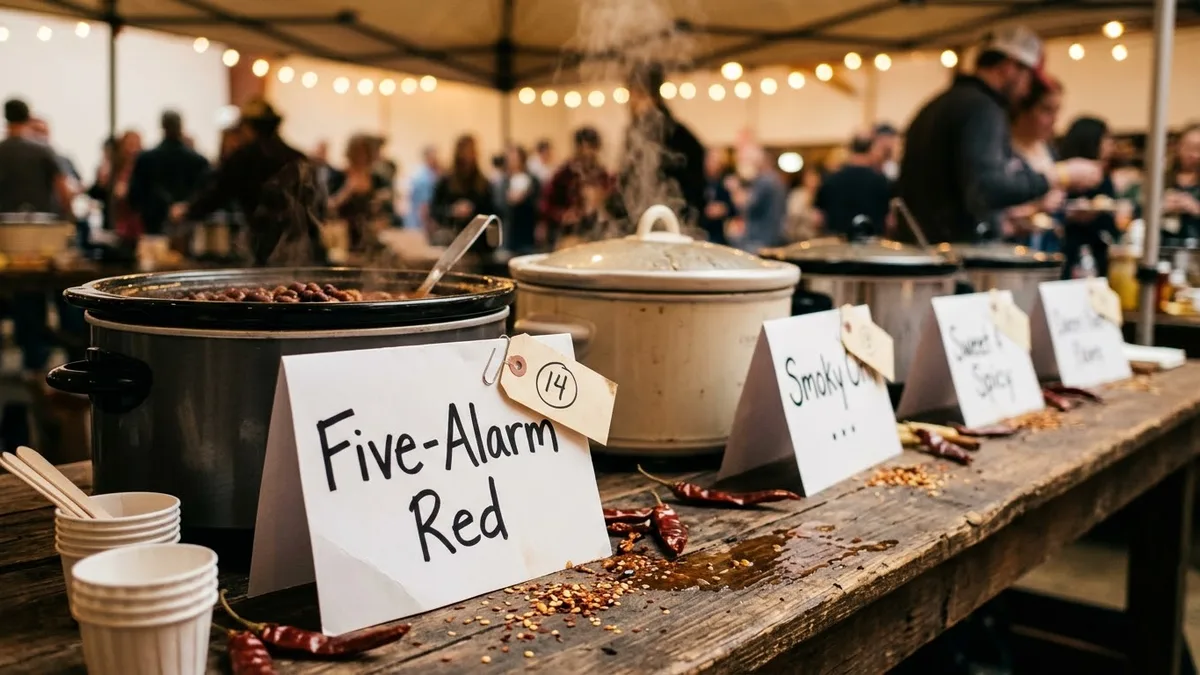
Chili names (sometimes called dish names or entry names) identify one specific pot on the day. These go on the tent card, the entry form, and the printed ballot judges use to score entries. If your event uses numbered blind tasting, the dish name might replace the number entirely on the public-facing card - which means it needs to stand alone.
Mixing them up causes two real problems. A team name on a tent card ("The Bean Counters") often reveals who made the chili before voting closes, which undermines blind judging. And a chili name used as a team identity ("Five-Alarm Red") gives your group nothing to rally around across multiple events, since you'll want a new dish name every time you enter something different.
Team Names, By Category
Pun-Based Team Names
- Chili's Angels
- Chili Willy
- The Bean Counters
- Ladle to the Party
- Pot Committed
- Two Guys and a Pot
- Chili Peppers (Not the Band)
- The Great Chili Dynasty
- Full Metal Ladle
- Chili Reception
Competitive and Intimidating Team Names
- The Undefeated
- Reigning Champs
- No Mercy Chili
- The Heat Wave
- Category Killers
- The Silent Assassins
- Podium or Bust
- The Contenders
- Trophy Hunters
- Last Pot Standing
Office and Workplace-Safe Team Names
Best for an office chili cook-off, where the joke lands harder when it's about the shared workplace instead of the food.
- Accounting for Flavor
- HR Approved
- Out of Office, In the Kitchen
- The Break Room Bandits
- Cross-Functional Chili
- The Quarterly Cookers
- Meeting Overrun
- The Culture Committee
- Return to Office Chili
- The Synergy Squad
Family-Friendly Team Names
- The Family Recipe
- Grandma's Secret Weapon
- Three Generations, One Pot
- The Kitchen Crew
- Home Team Advantage
- Sunday Supper Squad
- The Cousins Club
- Kid Tested, Grandpa Approved
- Our House Special
- The Family Cauldron
Chili and Dish Names, By Category
These go on the tent card. Keep every one of them to two to four words - a judge reads it for two seconds while filling a tasting cup, not while sitting down to study it.
Pun-Based Chili Names
- Some Like It Haute
- Chili Today, Hot Tamale
- The Godfather of Chili
- One Pot Wonder
- Fifty Shades of Red
- The Slow Burn
- A Bean There, Done That
- Con Artist Chili
- The Usual Suspicions
- Chili Nation
Heat-Themed Chili Names
- Inferno in a Bowl
- Ring of Fire
- Five-Alarm Red
- Dragon's Breath
- Scoville Scale Tipper
- Mild Mannered
- Slow Burn Symphony
- Volcanic Ash Chili
- The Great Wall of Heat
- Witness Protection Chili
Regional and Style-Based Chili Names
- Texas Two-Step Red
- Cincinnati Classic
- Santa Fe Sunset
- Route 66 Red
- Border Town Bowl
- Bayou Bowl
- Rocky Mountain Red
- Prairie Fire
- Southwest Sunrise
- Lone Star Legacy
Family-Friendly Chili Names
- Grandma's Sunday Pot
- Comfort in a Bowl
- The Family Heirloom
- Cozy Kitchen Chili
- Homestyle Red
- Porch Light Chili
- Mama's Secret Pot
- Fireside Favorite
- The Original Recipe
- Warm Welcome Chili
How a Chili Name Interacts With Blind Tasting
This is the part the "600+ names" lists skip entirely, and it's the one that actually matters at a real event.
If you're running blind tasting - and most well-organized chili cook-offs are, because it's what keeps voting honest - entries get a random number when they arrive, and names are revealed only after voting closes. That means the tent card in front of each pot is usually the entry number, the chili's name, or both. It is almost never the team name, on purpose.
A dish name that names the cook, the department, or the team defeats the whole point. "The Bean Counters' Award-Winning Red" tells a judge exactly who made it and, if that's a popular coworker or a past winner, biases the vote before a single bite. A dish name should describe the chili, not identify the chef. "Slow Burn Symphony" tells a taster nothing about who made it. "The Bean Counters' Chili" tells them everything.
If your event skips blind tasting entirely and names are known upfront, this doesn't matter - name it however you want, team affiliation and all. But if you're not sure which format your event uses, ask the organizer before you print the tent card. It's a two-minute question that avoids an awkward moment when someone points out your "anonymous" entry has your team's name on it in 40-point font.
Keeping Names Workplace-Appropriate
For office events especially, a name that seemed funny in a group chat can read differently taped to a table in a conference room. A few guardrails that don't cost you the joke:
- Keep it clean enough for a company all-hands. If you'd hesitate to say it in front of your manager's manager, pick a different name.
- Avoid anything that singles out a person, accent, or background as the punchline. The best chili puns are about the food, the heat, or the event itself - not about a coworker.
- Test it read aloud, not just written down. A pun that looks fine on a tent card can land differently said out loud in front of a crowd. Read it to one other person before you commit.
- When in doubt, go food-focused instead of person-focused. "Five-Alarm Red" never has an HR problem. A name built around a nickname sometimes does.
None of this means office names have to be boring - the office-safe team names above are proof puns and workplace appropriateness aren't in tension. It just means the funniest version of a name is usually also the one that's safe to say to anyone in the building.
Picking Your Final Name
A few last rules of thumb, in order of importance:
- Decide team name or chili name first. Everything else follows from that one decision.
- If you're running blind tasting, keep the chili name anonymous. No team names, no cook's names, nothing that identifies who's behind the pot.
- Keep it to two to four words. Long names get truncated on tent cards and ballots, and judges won't read past the truncation.
- Say it out loud before you commit. If you have to explain the joke, pick a different name.
- Match tone to heat, or deliberately don't. A name that promises fire should deliver it. A name that undersells a genuinely hot entry is a warning problem, not a punchline - flag the heat somewhere even if the name is ironic.
Whichever name you land on, it's a small piece of a much bigger event. Get the rules, judging, and voting logistics sorted first, and the name is the fun part you get to do last.
Related reading:
Got your names? Set up the cookoff
Add your teams and dishes, keep entries blind until voting closes, and let Cookoff handle the scoring and the reveal.
Name my chili cookoff